Places answer questions pages can't.
This is the Lake Eola amphitheater in downtown Orlando, built as a place you can explore instead of a page you scroll. Each stop answers a question a visitor really asks.
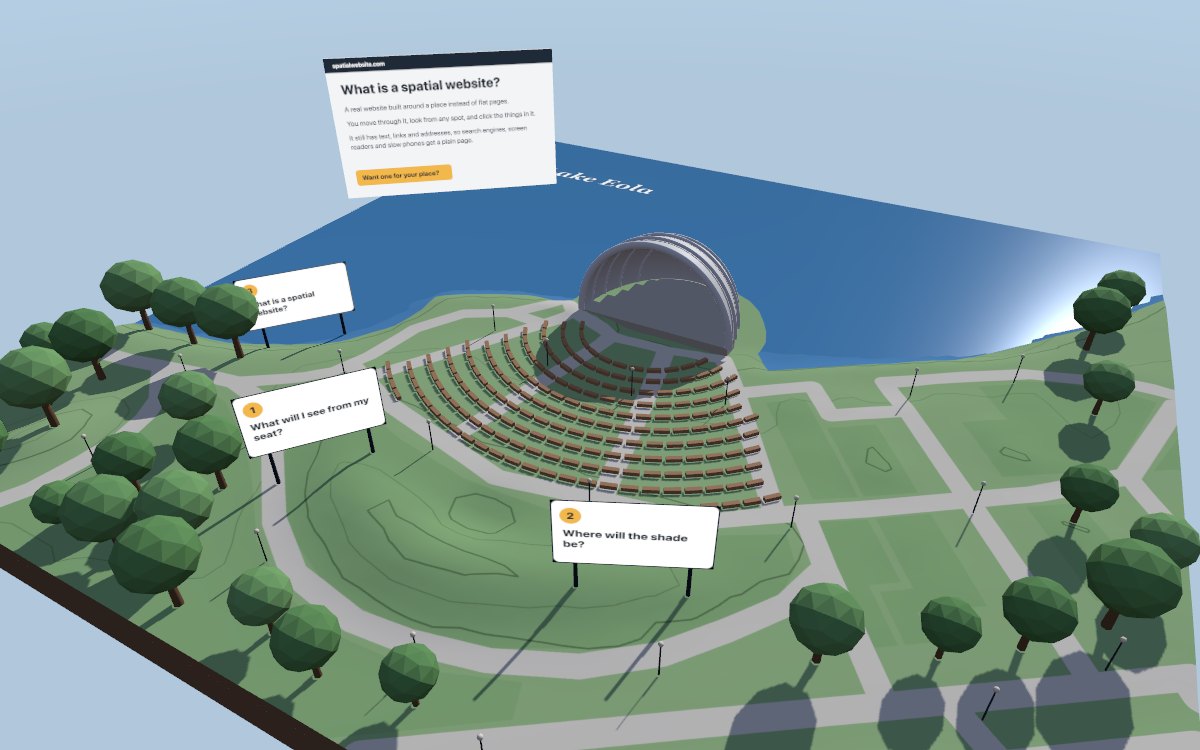
What will I see from my seat?
In the 3D place, pick a seat and the view flies there: seated eye height, facing the stage. You see what that seat sees, including what is in the way.
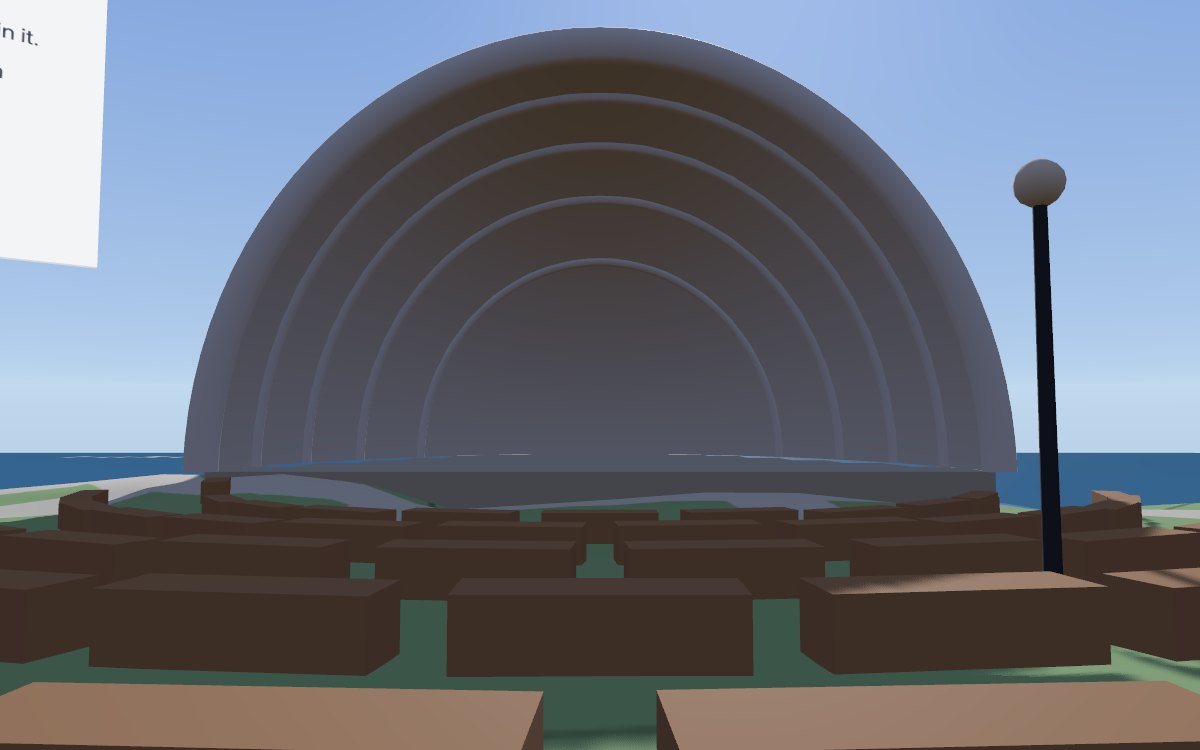
A typical venue site answers with a seat chart and one photo taken from the best spot in the house.
Will it be in shade at 5pm?
The model is lit by the real sun over Orlando for any date and time, so you can watch shade move across the seats and get an estimate of how much of the seating is shaded.
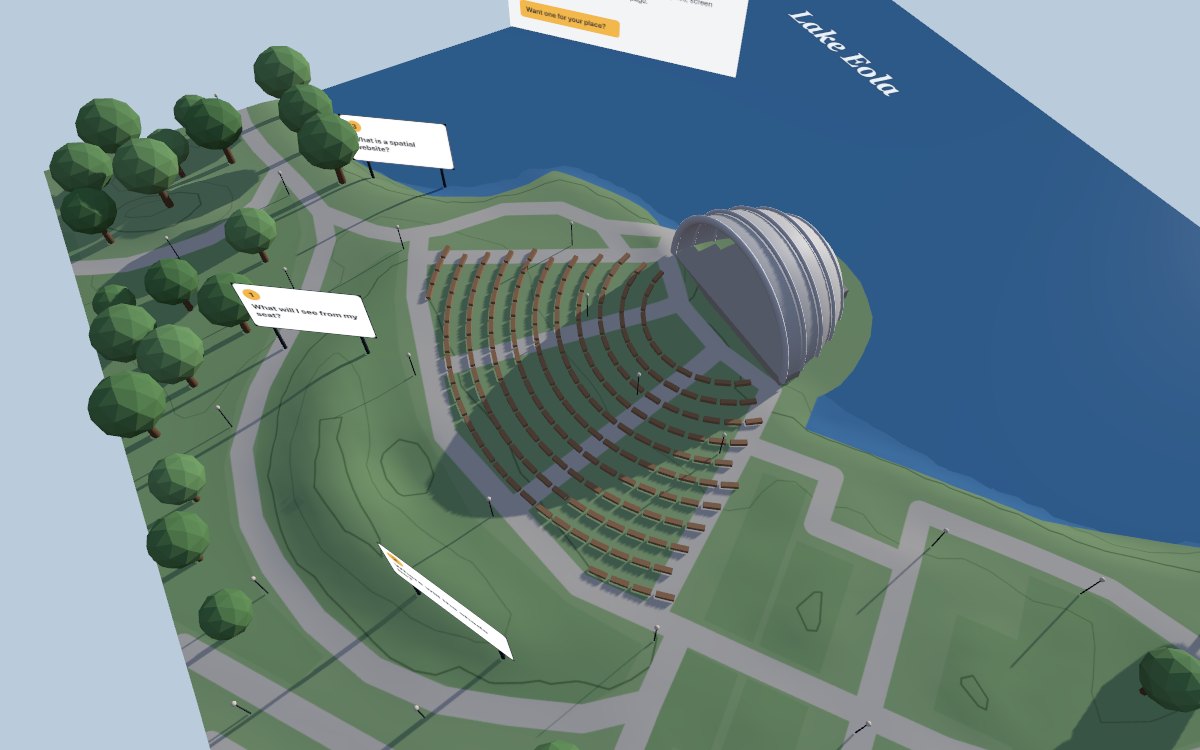
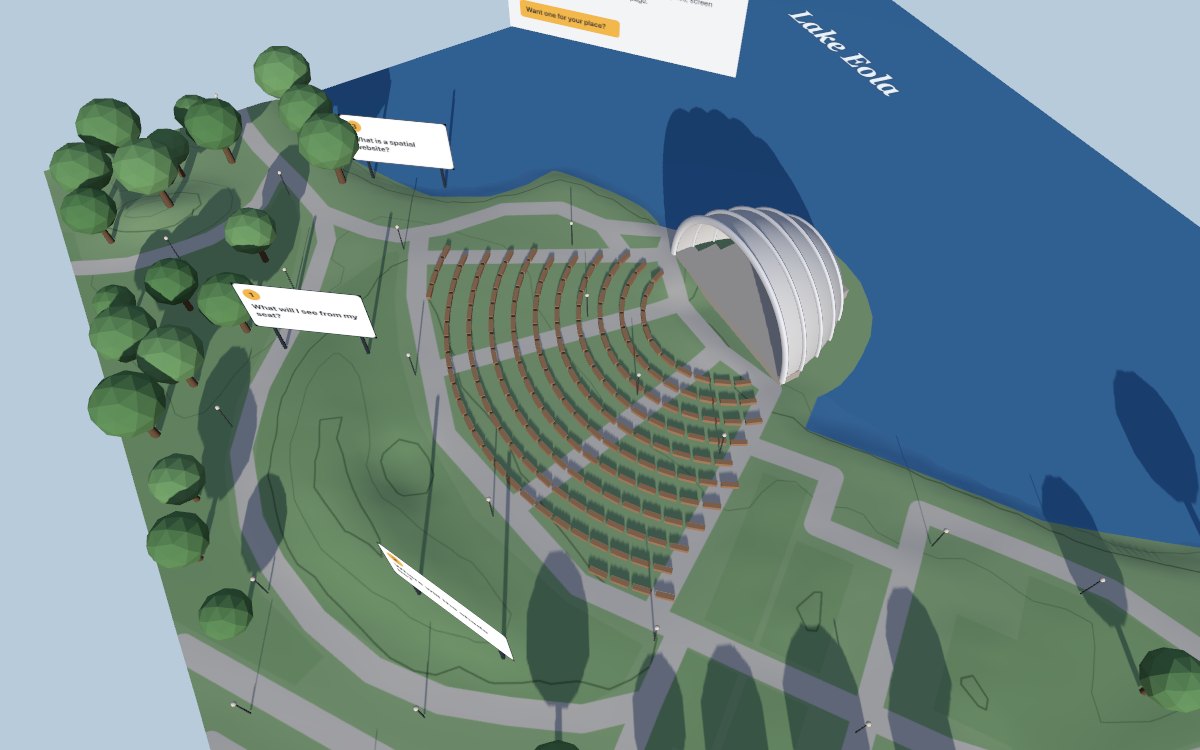
A typical venue site answers with one line: the sunset time.
What is a spatial website?
A spatial website is a real website built around a 3D place instead of flat pages. You can move through it, look from any spot, and click the things in it. It still has text, links and addresses like any other site, so search engines, screen readers and slow connections get this page.
When do you need one?
- When the question is about where: views, seats, shade, distance, what is in the way.
- When a photo can't show the thing that matters, like the view from one particular spot.
- For venues, parks, hotels, attractions, campuses and real estate.